


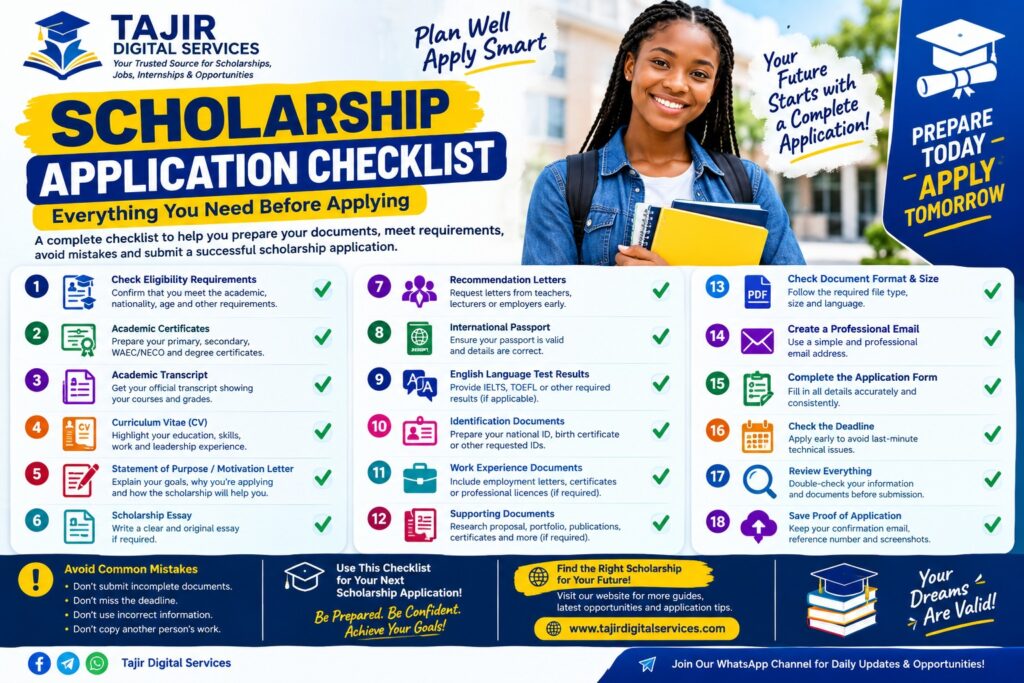
Applying for a scholarship can be exciting, but missing an important document or requirement can affect your chances of success. Many students spend time preparing scholarship applications only to discover that they forgot to upload a required document, missed a deadline, or submitted incorrect information.
This complete Scholarship Application Checklist will help you prepare everything you need before submitting your application.
Whether you are applying for a local scholarship, international scholarship, fully funded scholarship, undergraduate scholarship, Master’s scholarship, or PhD scholarship, this guide can help you stay organised.
Why You Need a Scholarship Application Checklist
Scholarship applications often require several documents and steps. The requirements may vary depending on the scholarship provider, university, organisation, or country.
Using a checklist can help you:
- Avoid forgetting important documents.
- Submit your application before the deadline.
- Check that your information is correct.
- Prepare your documents in advance.
- Reduce mistakes during the application process.
- Improve your chances of submitting a complete application.
1. Check the Scholarship Eligibility Requirements
Before spending time preparing your application, carefully read the eligibility requirements.
Check whether you meet the following requirements:
- Nationality or country requirements.
- Academic qualifications.
- Required academic grades or GPA.
- Age requirements, if applicable.
- Work experience requirements.
- English language requirements.
- Programme or course requirements.
- University admission requirements.
Do not assume that you are eligible. Always read the official scholarship requirements carefully.
2. Prepare Your Academic Certificates
Many scholarships require applicants to submit academic documents.
These may include:
- Primary school certificates.
- Secondary school certificates.
- WAEC, NECO, or equivalent results.
- Diploma certificates.
- Bachelor’s degree certificates.
- Master’s degree certificates.
- Professional qualifications, where applicable.
Make sure your certificates are clear and readable before uploading them.
3. Prepare Your Academic Transcript
An academic transcript is one of the most commonly requested scholarship documents.
Your transcript usually shows:
- Courses studied.
- Grades obtained.
- Academic performance.
- GPA or CGPA.
- Institution attended.
Some scholarships require an official transcript directly from your university or school. Always check the scholarship instructions.
4. Prepare Your Curriculum Vitae (CV)
Your CV should provide a clear summary of your:
- Educational background.
- Work experience.
- Skills.
- Volunteering experience.
- Leadership experience.
- Awards and achievements.
- Professional experience.
Keep your CV professional, organised, and relevant to the scholarship you are applying for.
Avoid including unnecessary information that does not support your application.
5. Prepare Your Statement of Purpose or Motivation Letter
Many scholarships require applicants to explain why they are applying.
Your Statement of Purpose or Motivation Letter may discuss:
- Your academic background.
- Your career goals.
- Why you selected the programme.
- Why you deserve the scholarship.
- Your future plans.
- How the scholarship will help you achieve your goals.
Always follow the specific instructions provided by the scholarship organisation.
If a word limit is provided, make sure you do not exceed it.
6. Prepare Your Scholarship Essay
Some scholarship programmes require a separate essay.
The topic may ask you to discuss:
- Leadership.
- Community service.
- Academic achievements.
- Personal challenges.
- Career ambitions.
- Social impact.
- Why you deserve financial support.
Write an original essay and make sure it directly answers the question.
Before submitting your essay:
- Check your spelling.
- Check your grammar.
- Remove unnecessary sentences.
- Confirm that you answered the question.
- Ask someone you trust to review it.
7. Request Recommendation Letters Early
Some scholarships require recommendation letters from:
- Lecturers.
- Teachers.
- Employers.
- Supervisors.
- Professional mentors.
Do not wait until the final day before asking for a recommendation letter.
Contact your referee early and provide enough information about the scholarship and deadline.
Make sure the person recommending you knows you well enough to write a strong recommendation.
8. Check Your Passport
International scholarships may require a valid international passport.
Check:
- Whether your passport is still valid.
- The expiration date.
- Whether your name is correctly written.
- Whether your passport information matches your application details.
If you do not have a passport, check whether the scholarship requires it during the application stage or after selection.
9. Prepare English Language Test Results
Some international scholarships and universities may require English language test results.
Examples may include:
- IELTS.
- TOEFL.
- PTE.
- Other accepted English proficiency tests.
However, some scholarships and universities may provide exemptions depending on your previous education or country.
Always check the official requirements before paying for an examination.
10. Prepare Your Identification Documents
Depending on the scholarship, you may need:
- International passport.
- National identity card.
- Birth certificate.
- National identification number.
- Other government-issued identification documents.
Make sure the information on your documents matches the information you enter in your scholarship application.
11. Prepare Proof of Work or Professional Experience
Some scholarships, fellowships, and postgraduate programmes require work experience.
You may need to provide:
- Employment letters.
- Appointment letters.
- Work certificates.
- Professional licences.
- Internship certificates.
Check whether the scholarship requires a specific number of years of experience.
12. Prepare Supporting Documents
Some scholarship applications may request additional documents such as:
- Research proposal.
- Portfolio.
- Publications.
- Certificates of achievement.
- Volunteer certificates.
- Leadership certificates.
- Professional certifications.
Only submit documents requested by the scholarship provider.
13. Check Document Format and File Size
Before uploading your documents, check:
- Required file format.
- Maximum file size.
- Required document language.
- Whether documents need to be certified.
- Whether translation is required.
Many applications accept PDF files, but you should always follow the instructions provided on the official application portal.
Give your files clear names, for example:
- Academic_Transcript.pdf
- Passport.pdf
- CV.pdf
- Motivation_Letter.pdf
Avoid uploading files with confusing names.
14. Create a Professional Email Address
Your scholarship application should use a professional email address.
Your email address should preferably include your real name.
Avoid using email addresses with:
- Nicknames.
- Unprofessional words.
- Random characters.
Also check your email regularly because scholarship organisations may contact applicants through email.
15. Complete the Application Form Carefully
Before submitting the application form, check:
- Your full name.
- Date of birth.
- Email address.
- Phone number.
- Academic information.
- Institution names.
- Programme selection.
- Document uploads.
Make sure all information is accurate and consistent with your official documents.
16. Check the Scholarship Deadline
Never wait until the last day before submitting your application.
Technical problems can happen, including:
- Slow internet connection.
- Website errors.
- Login problems.
- Document upload issues.
- Application portal maintenance.
Try to submit your application several days before the official deadline.
17. Review Everything Before Submission
Before clicking the submit button, carefully review your application.
Use this final checklist:
☐ I meet all eligibility requirements.
☐ I completed every required section.
☐ My personal information is correct.
☐ My academic information is correct.
☐ I uploaded all required documents.
☐ My CV is updated.
☐ My essay or Statement of Purpose has been reviewed.
☐ My recommendation letters are included if required.
☐ My documents are clear and readable.
☐ My files meet the required format and size.
☐ I checked the application deadline.
☐ I reviewed the entire application before submission.
18. Save Proof of Your Application
After submitting your scholarship application, save:
- Confirmation emails.
- Application reference numbers.
- Screenshots of successful submission.
- Copies of uploaded documents.
This can be useful if you need to contact the scholarship provider later.
Common Scholarship Application Mistakes to Avoid
Avoid these common mistakes:
- Applying without checking eligibility.
- Submitting incomplete documents.
- Using incorrect personal information.
- Copying another person’s scholarship essay.
- Waiting until the last day.
- Ignoring application instructions.
- Uploading unclear documents.
- Using an outdated CV.
- Missing the deadline.
Final Thoughts
A scholarship application requires preparation, organisation, and attention to detail. Even a strong student can miss an opportunity because of an incomplete application or a simple mistake.
Use this Scholarship Application Checklist every time you apply for a new scholarship. Carefully read the official requirements because each scholarship may have different documents and conditions.
Preparing your documents early will make the application process easier and give you enough time to submit a complete and accurate application.
Quick Scholarship Application Checklist
Before applying, make sure you have:
☐ Checked eligibility requirements.
☐ Academic certificates.
☐ Academic transcript.
☐ Updated CV.
☐ Statement of Purpose or Motivation Letter.
☐ Scholarship essay, if required.
☐ Recommendation letters, if required.
☐ Passport or identification documents.
☐ English language test results, if required.
☐ Supporting documents.
☐ Correct file formats and sizes.
☐ Checked the official deadline.
☐ Reviewed the application before submission.
Good preparation can make the scholarship application process much easier. Stay organised, apply early, and always follow instructions from the official scholarship provider.