


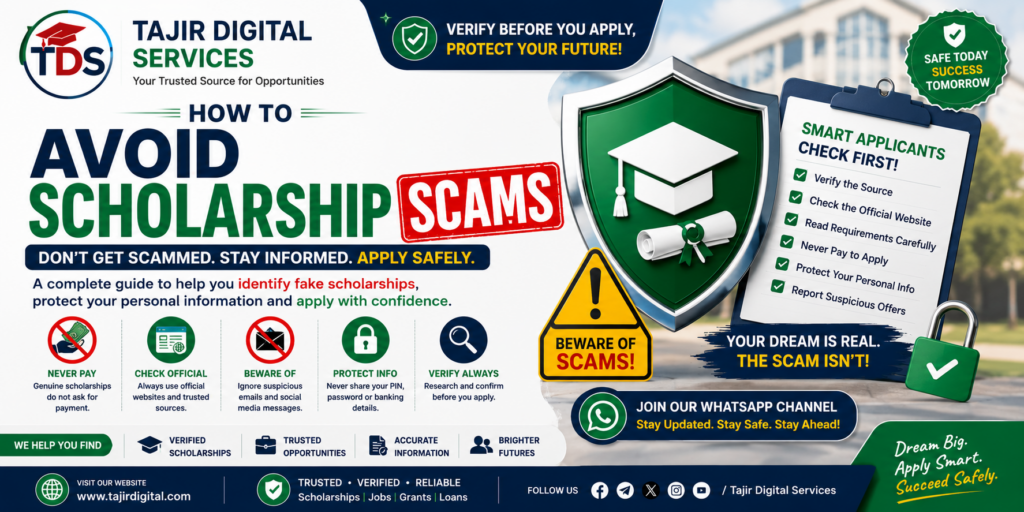
As global education costs rise, millions of students actively search for international scholarships, grants, and study-abroad funding. Unfortunately, cybercriminals and fraudulent agencies frequently exploit these ambitions. By creating copycat portals, sending phishing emails, and promising guaranteed awards in exchange for upfront payments, scammers harvest sensitive personal data and steal thousands of dollars annually.
Protecting yourself requires sharp evaluation skills and an understanding of how legitimate selection committees operate. This guide outlines the most common fraudulent tactics, major red flags, verification strategies, and safe application practices.
📊 Legitimate Scholarships vs. Fraudulent Scams
Understanding the fundamental operational differences between authentic scholarship bodies and online scams is your primary line of defense:
| Feature / Metric | Legitimate Scholarship Body | Fraudulent Scholarship Scam |
| Application Fee | 100% Free (No exceptions) | Demands “processing,” “clearance,” or “tax” fees |
| Selection Basis | Merit, financial need, or competitive essay | “100% Guaranteed Approval” / Instant selection |
| Domain & Communication | Official domains (.edu, .gov, .ac.uk) | Generic emails (@gmail.com, @yahoo.com) |
| Data Requests | Transcripts, CV, SOP, official IDs | Credit card numbers, PINs, mobile banking logins |
| Unsolicited Offers | Only contacts applicants who formally applied | Sends unexpected emails claiming you “won” |
🚩 6 Major Red Flags of Fake Opportunities
Keep a sharp eye out for these critical warning indicators when browsing online portals or receiving unsolicited messages:
- Mandatory Upfront Payments: Any request for money under the guise of an “application fee,” “file registration fee,” or “visa insurance clearance” is an immediate indicator of fraud.
- “Guaranteed” Award Promises: No legitimate university or government foundation guarantees funding before evaluating an applicant’s complete academic profile and competitive merit.
- Unsolicited Winner Notifications: Receiving an email or WhatsApp message stating you won a scholarship you never applied for is a classic phishing technique.
- Suspicious Web URLs & Free Email Addresses: Watch out for lookalike domains (such as
.com-apply.infoinstead of.edu) and official-sounding emails originating from free domain providers (e.g.,cheveningscholarship2026@gmail.com). - Pressure Tactics & Artificial Deadlines: Fraudsters often demand immediate payment or file uploads within 24 hours under the threat of “losing your slot.”
- Poor Formatting and Language: Official academic institutions maintain strict public relations standards. Announcements filled with severe grammatical errors, low-resolution logos, or broken web layout links should be treated with extreme caution.
🔍 How to Verify a Scholarship’s Authenticity
Before uploading your passport, academic transcripts, or personal details to any online portal, run this 4-step verification audit:
- Inspect the Web Domain: Ensure the application URL leads to an officially registered university domain (
.edu,.ac.uk,.edu.ng) or an official government portal (.gov). - Cross-Check via Direct Channels: If you receive an offer via email or social media, navigate independently to the institution’s official website and contact their Admissions or International Student Office directly.
- Search for Alumni & Past Scholars: Long-standing scholarship programs (such as MEXT, Commonwealth, or Chevening) have publicly verifiable alumni networks on professional platforms like LinkedIn.
- Use Verified Aggregators: Rely on trusted, thoroughly vetted educational platforms such as Tajir Digital Services to access verified opportunities rather than unverified WhatsApp chain links.
🛡️ Action Plan: What to Do If You Encounter a Scam
If you realize an opportunity you are reviewing or communicating with is fraudulent:
Secure Your Accounts: If you entered passwords on a lookalike website, immediately update your credentials across all personal accounts and enable Two-Factor Authentication (2FA).
Cease All Communication: Immediately stop replying to phone calls, emails, or direct messages.
Never Send Funds or Documents: Do not transfer money, and refrain from uploading scanned IDs or bank statements.
Block and Report: Block the sender’s contact details and report the fake social media accounts, Telegram groups, or domain URLs to search engines and platform administrators.